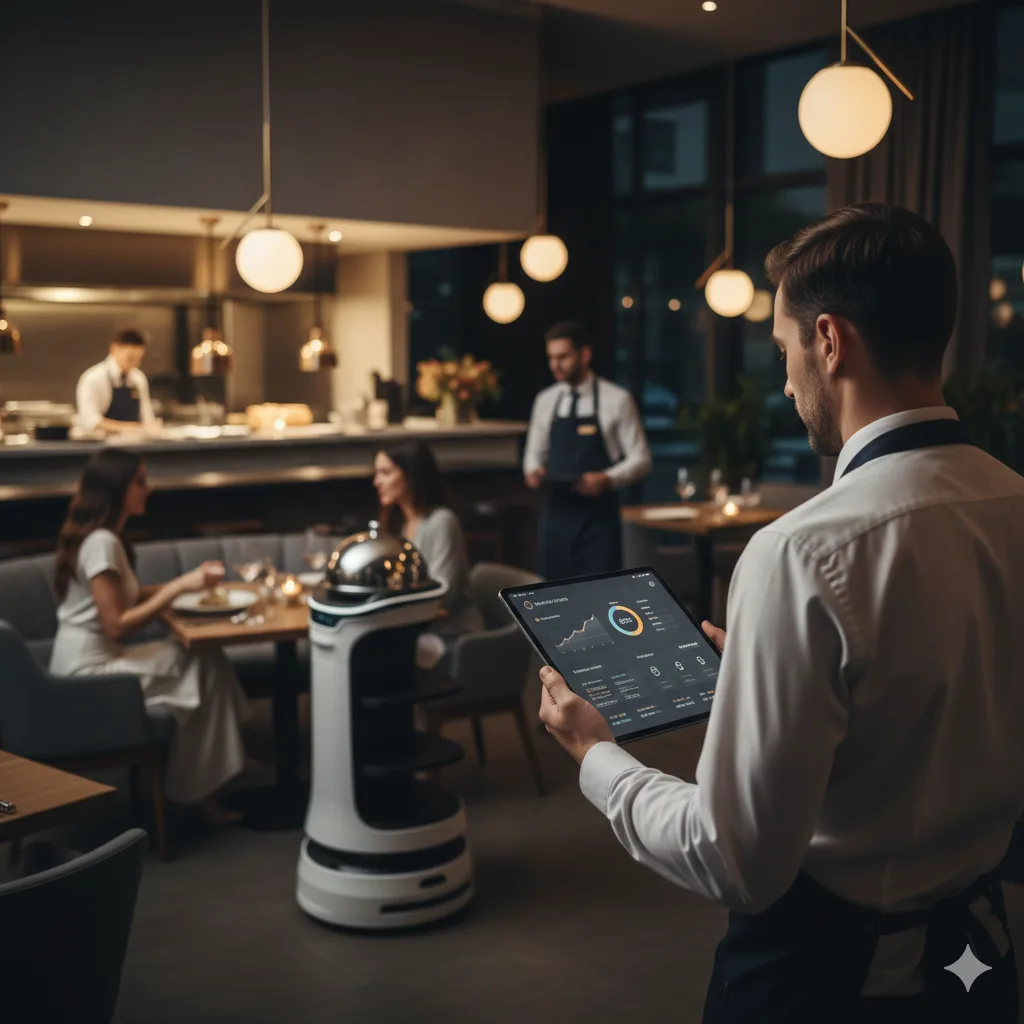
Restaurant Automation: A Look Behind the QR Code
Quick answer
From QR menus to kitchen systems, this breaks down how restaurant automation really works behind the scenes and why smarter workflows now shape the dining experience.
Frequently asked questions
What is the main takeaway from "Restaurant Automation: A Look Behind the QR Code"?
From QR menus to kitchen systems, this breaks down how restaurant automation really works behind the scenes and why smarter workflows now shape the dining experience.
Who published "Restaurant Automation: A Look Behind the QR Code"?
Trudosys published this article on 2025-10-30.
You sit down at a table, scan the QR code, and the menu instantly appears on your phone. This sounds simple, but behind that scan sits a whole layer of restaurant automation. It usually starts with a digital menu, but what makes the real difference is everything happening behind the scenes after you tap an item.
So why is this technology suddenly everywhere? Many restaurants have to juggle staff shortages, rising costs, and customer expectations that move faster every year. Behind the QR code is not just a digital menu. It is a way to make service feel more modern while reducing the repetitive work that keeps pulling teams away from customers.
Restaurants that use automation well are not trying to replace hospitality. They are using technology to remove friction from the flow of service so the team can focus on the parts of the experience guests actually remember.
Why You’re Becoming Your Own Waiter: The Rise of Self-Service Tech
For customers, the first visible change is often self-service. Guests can browse the menu, customize an order, request help, or even pay from their phone without waiting for someone to arrive with a card machine or a printed menu.
That sounds small, but it changes the pace of the floor. Guests do not have to wait just to place a simple order, and the team is not pulled away from higher-value service moments to repeat the same small tasks again and again.
Self-service works best when it matches the way your restaurant already operates. Otherwise it just creates a new layer of confusion. The goal is not to replace staff. It is to let them spend more time on service and less time repeating the same admin steps.
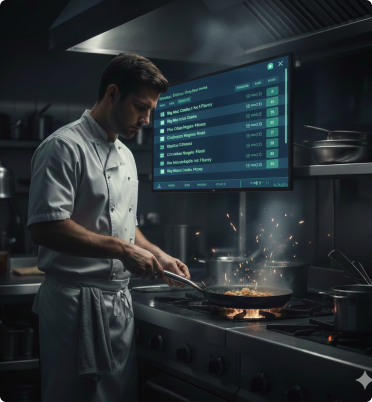
The Restaurant’s Brain: How Your Order Travels from a Screen to Your Plate
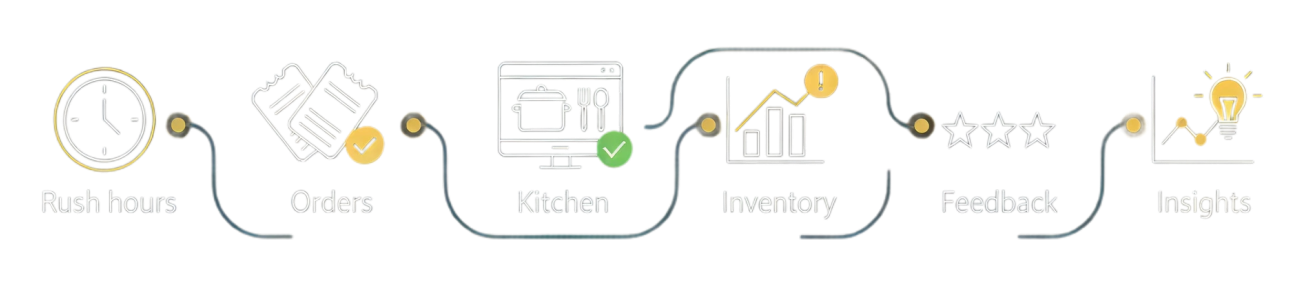
What customers do not see is the system that routes the order behind the scenes. Most restaurant automation runs through the point-of-sale layer and the operational logic connected to it. Once an order is placed, the information has to move to the right station, update timing, and stay visible to the people actually preparing the food.
That is where a restaurant’s real brain sits. It is not only about taking an order. It is about helping the kitchen, service team, and front desk all work from the same live information instead of separate guesses and verbal handoffs.
When the flow is clean, mistakes drop. Staff spend less time clarifying what was ordered, and the guest experiences a restaurant that feels fast and reliable rather than rushed.
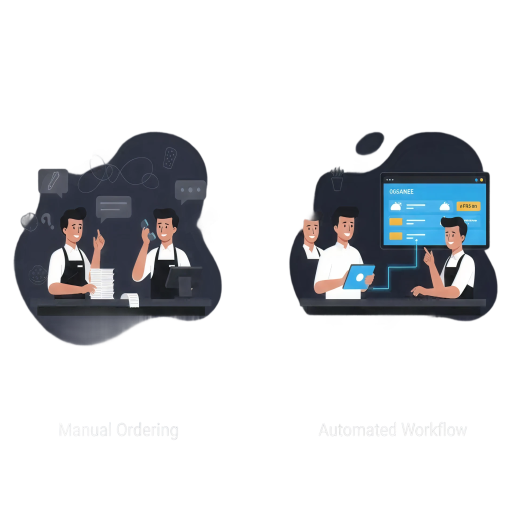
From Paper Chaos to Digital Calm: The Tech That Makes Kitchens Faster
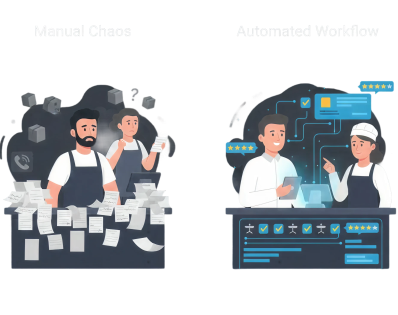
Kitchen screens, live order queues, and connected prep workflows replace the scribbled tickets and verbal relays that break under pressure. Every order becomes visible, trackable, and easier to route correctly during rush hours.
That shift changes more than the kitchen. Front-of-house teams answer fewer status questions, chefs spend less time correcting confusion, and the entire service rhythm becomes calmer even when volume goes up.
When the back of house no longer relies on memory and paper alone, speed improves without creating more noise.
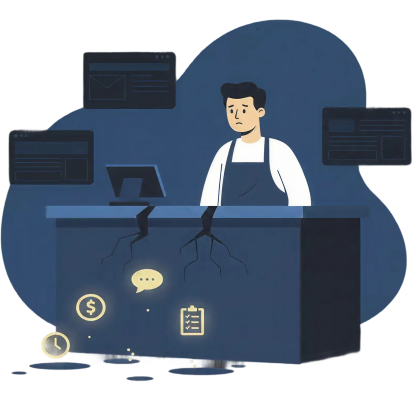
How Smart Kitchens Avoid the Dreaded “Sorry, We’re Out of That”
Inventory is another place where restaurants quietly lose money. When stock levels live in memory, on spreadsheets, or in disconnected systems, shortages show up late and teams scramble to react in front of guests.
Smart kitchen workflows improve that by making inventory movement easier to see. Teams can spot slow-moving items, identify supply issues earlier, and avoid waste before it becomes expensive.
This is where automation stops feeling like a feature and starts feeling like operational confidence.
Will a Robot Make My Next Meal? A Look at the Food Service Future
Technology in restaurants does not have to mean turning the dining experience into a machine. The real future is quieter than that. It is systems handling the repetitive work that slows staff down while the team stays focused on hospitality.
Whether it is smarter prep support, more accurate scheduling, or better order flow, automation helps restaurants scale service quality without adding chaos.
The best implementations do not draw attention to themselves. They simply make the whole experience feel smoother, faster, and easier for both staff and guests.
Does More Technology Mean Less Hospitality?
That fear comes up often, but the better systems do the opposite. They remove the background tasks that keep staff busy with devices and admin so they can spend more time with guests. Instead of replacing hospitality, the right tools protect it.
Customers still remember how a place made them feel. Technology matters because it helps the service stay fast, clear, and dependable even when the restaurant is under pressure.
Your Next Meal: Why Smarter and Faster Is the New Normal
The next great restaurant experiences will feel effortless because the technology behind them is doing more of the quiet work. Orders will move with less friction, teams will coordinate more cleanly, and guests will feel that difference without needing to understand the systems at all.
That is the value of restaurant automation when it is done properly. It does not force you into a generic tool. It gives your restaurant a better operating rhythm built around the way you already work.
Smarter and faster are no longer extras. They are becoming the new baseline for what diners expect.