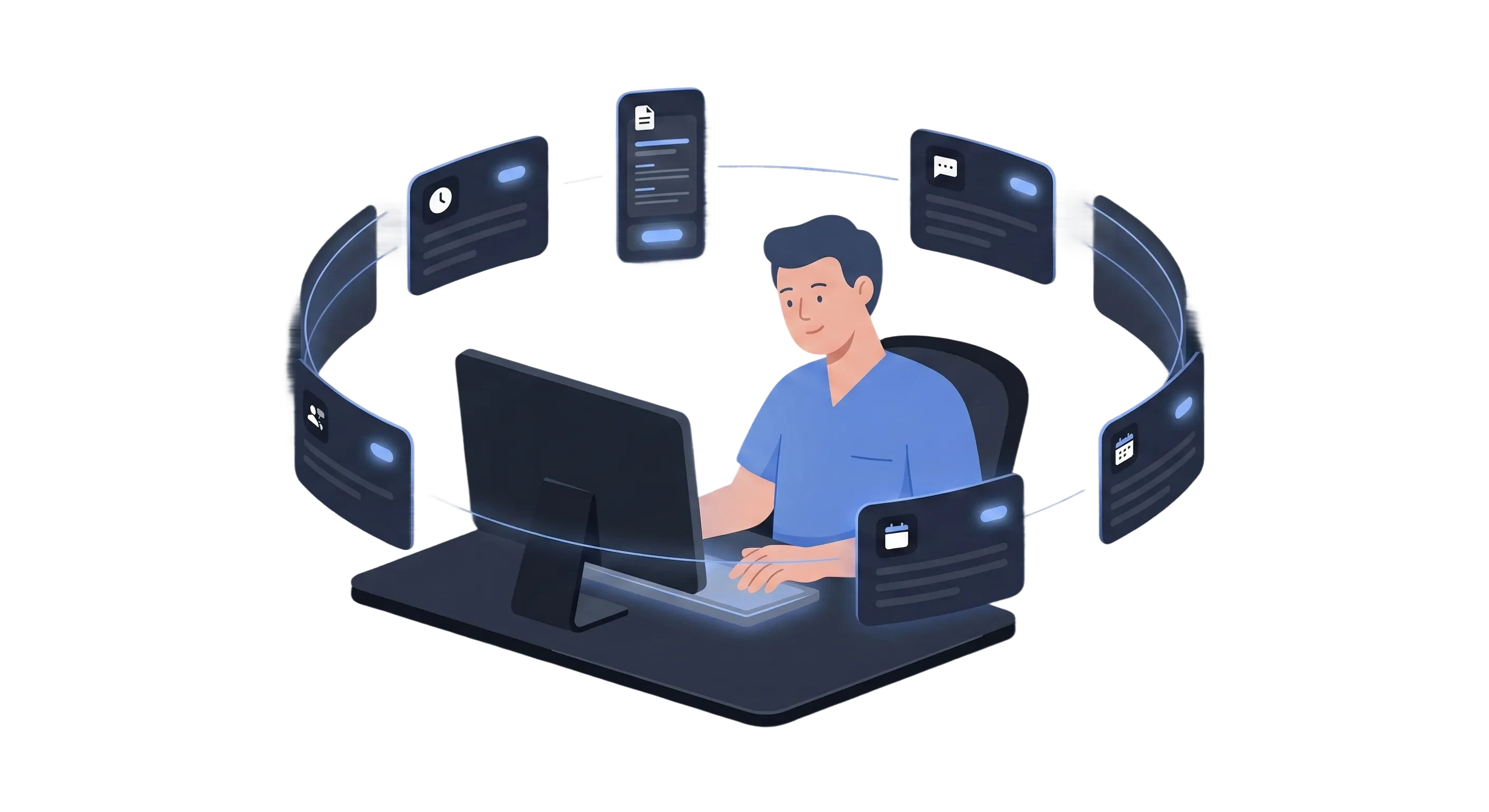
How Healthcare Providers Can Improve Operations with Custom Software in 2026
Quick answer
Healthcare teams need more than generic software. They need systems that reduce administrative drag, support scheduling and communication, and give teams clearer visibility without adding more disruption.
Frequently asked questions
What is the main takeaway from "How Healthcare Providers Can Improve Operations with Custom Software in 2026"?
Healthcare teams need more than generic software. They need systems that reduce administrative drag, support scheduling and communication, and give teams clearer visibility without adding more disruption.
Who published "How Healthcare Providers Can Improve Operations with Custom Software in 2026"?
Trudosys published this article on 2026-03-28.
Healthcare teams are doing more than ever. Patient numbers keep growing. Expectations are higher. Staff are stretched thin. And alongside actual care, there’s a growing layer of coordination work that never seems to slow down.
Appointments need managing. Patients need updates. Records need syncing. Departments need to stay aligned. Most healthcare providers are not struggling because of medical complexity. They’re struggling because too much time is spent keeping the system running.
As 2026 approaches, many clinics and hospitals are starting to focus on one question. How do we reduce operational load without affecting care quality?
That’s where custom healthcare software starts to matter.

Administrative work quietly eats into care time
A lot of pressure in healthcare comes from small tasks that repeat every day. Appointment confirmations. Follow-ups. Collecting forms. Sharing updates internally. None of these are difficult on their own.
But together, they take up hours. Doctors run behind. Front desk teams feel overwhelmed. Patients wait longer than they should. Everyone feels rushed, even when the day is well planned.
The problem isn’t effort. It’s that too much depends on manual coordination.
Most healthcare software doesn’t match how teams actually work

Many healthcare organizations use standard tools for scheduling or records. These systems help, but they’re often rigid. They assume one workflow, one approval path, and one way of handling cases.
In reality, healthcare operations are rarely that simple. Different departments work differently. Some cases need extra steps. Some patients require coordination across teams. When systems don’t support this, people fill the gaps manually.
Over time, those workarounds become the real process.
Custom software takes the opposite approach. It adapts to how the organization already functions instead of asking teams to change how they work.
Automation reduces load without removing control
There’s a common concern that automation will make healthcare feel mechanical. In practice, when done properly, it removes friction instead.
Things like reminders, form handling, internal notifications, and basic updates can happen without someone manually triggering them every time. Staff don’t lose control over decisions or care. They simply stop carrying the mental load of repetitive steps.
This creates breathing room. Teams can focus on patients instead of managing the process.
Visibility makes daily decisions easier
Running a healthcare organization requires constant decisions. How full is the schedule today? Where are delays forming? Which teams are stretched? Which slots are underused?
When this information is scattered, leaders rely on assumptions or late updates. Decisions become reactive. Small issues turn into bigger ones because they’re spotted too late.
When operational data lives in one place and stays current, decision-making feels calmer. Teams don’t need to chase information. Issues show up earlier. Adjustments happen before pressure builds.
This kind of visibility becomes more important as organizations grow.
5. Patient experience improves when operations are clear
Patients usually judge their experience on simple things. Was booking easy? Were the reminders clear? Did staff seem informed? Did things move on time?
When systems are disconnected, patients feel the gaps. Repeated questions. Confusing updates. Delays that aren’t explained well.
Custom healthcare software connects scheduling, communication, and internal coordination so patients experience fewer handoffs and less confusion. The care feels smoother, even though the work behind it becomes simpler.
6. Growth becomes easier to support
As clinics expand or hospitals add services, operational pressure increases. More patients mean more coordination. More services mean more dependencies.
If systems are already stretched, growth feels risky. Teams hesitate because they know the workload will spike.
Custom software creates a structure that can handle more volume without chaos. Processes scale quietly. Teams don’t need to reinvent how they work every time demand increases.
Where Trudosys Fits In
Trudosys builds custom healthcare software based on real operational needs. Instead of offering generic tools, systems are designed around how clinics and hospitals actually function day to day.
Scheduling, patient communication, internal workflows, approvals, and reporting are brought together into one clear system. Routine coordination happens in the background. Teams get visibility without extra complexity.
The focus is not on adding features. It’s about removing friction.
Healthcare providers heading into 2026 don’t need dramatic change. They need systems that support the work already happening. When operations become smoother, teams feel calmer, decisions get easier, and patients feel the difference. That’s where custom healthcare software makes a real impact.